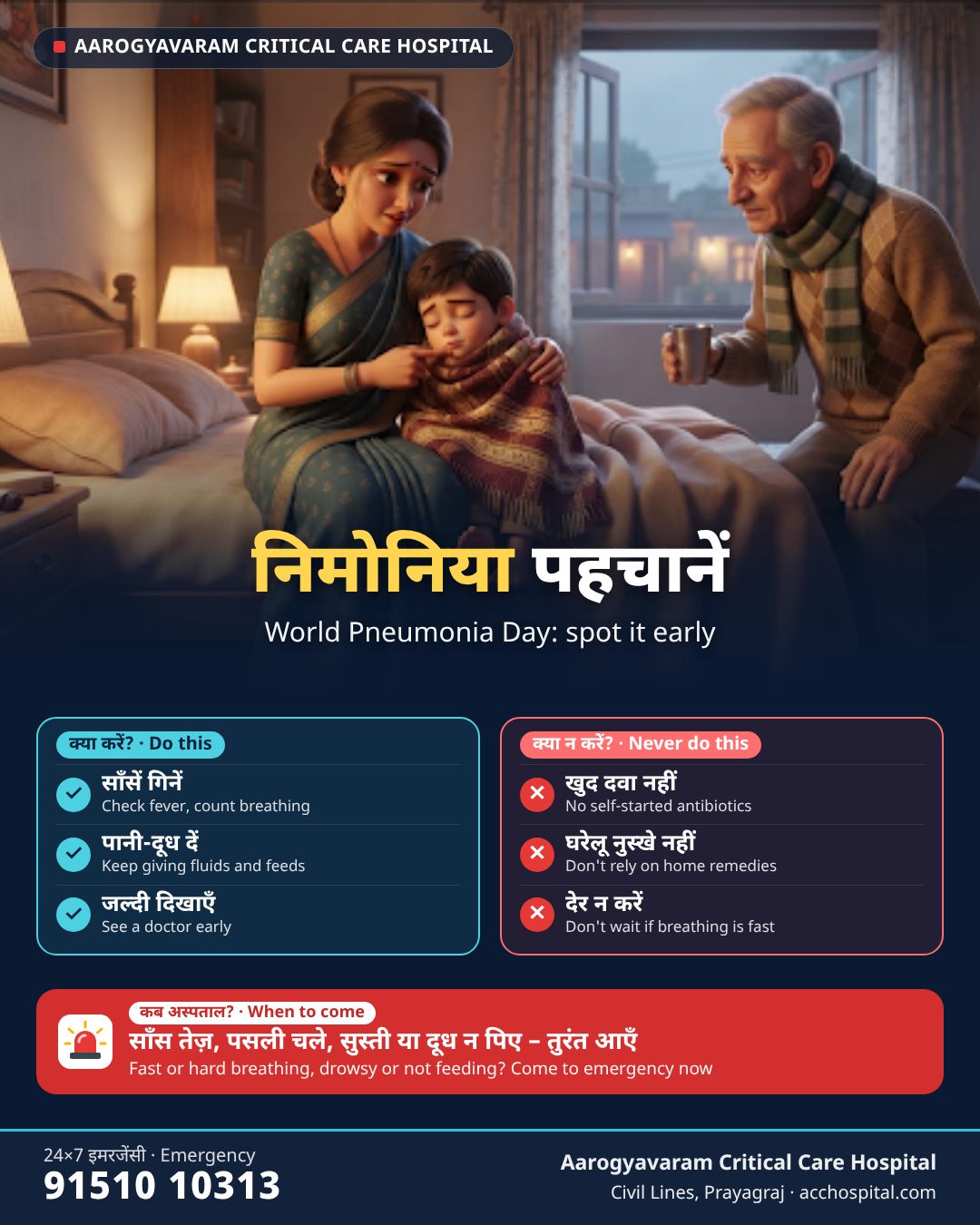
Pneumonia is an infection of the lungs. The small air sacs inside the lungs fill with fluid or pus, so the body cannot take in enough oxygen. In Prayagraj, cases rise every winter, when cold mornings, smoke and smog, and seasonal flu all strike at once. Young children and elderly people can go from a simple cough to serious breathlessness within a day or two. The one thing to remember: fast or difficult breathing is a warning sign – do not wait at home.
24×7 Emergency 📞 Call 91510 10313
What is pneumonia? (Nimoniya kya hai?)
Our lungs are made of millions of tiny air sacs. With every breath, oxygen passes from these sacs into the blood. In pneumonia, germs – bacteria, viruses or, less often, fungi – infect the sacs. The sacs swell and fill with fluid, so less oxygen reaches the blood. That is why a person with pneumonia breathes fast, feels tired and may look bluish.
Pneumonia can affect one part of one lung or both lungs. It may follow a cold or flu, or start on its own. Some people catch it in the community (at home, school or work); others develop it while already in hospital for another illness. People often call it "chest infection" or "phephde mein infection" (फेफड़ों में संक्रमण).
Symptoms and warning signs
Common symptoms in adults:
- Fever, often with chills or shivering
- Cough, sometimes with yellow, green or blood-stained phlegm (balgam)
- Breathlessness (saans phoolna), even while resting or talking
- Chest pain that gets worse on breathing deeply or coughing
- Tiredness, loss of appetite, sweating
In children, look for:
- Fast breathing – count breaths for a full minute while the child is calm
- The lower chest pulling in with each breath (pasli chalna / पसली चलना)
- Grunting, wheezing or noisy breathing (gharghrahat)
- Not feeding or not drinking, repeated vomiting
- Unusual sleepiness or difficulty waking up
In elderly people, pneumonia may not cause high fever. Watch instead for sudden confusion, drowsiness, falls, weakness, or simply "not being themselves".
Causes and who is at risk
Pneumonia is usually caused by germs spread through coughing and sneezing. Anyone can get it, but the risk is higher for:
- Children under 5 years, especially babies born early or underweight
- Adults over 60 years
- People with diabetes, heart disease, kidney disease, asthma or COPD (long-term lung disease)
- Smokers, and families exposed to chulha smoke, crop-burning smoke or heavy traffic pollution
- People with weak immunity – for example during cancer treatment, after long illness, or with poor nutrition
- Patients who are bedridden or have difficulty swallowing (food can enter the lungs – called aspiration pneumonia)
First aid: what to do at home
These steps help while you arrange medical care. They do not replace a doctor.
- Check the breathing. Count breaths for one minute. Note any chest pulling, blue lips or difficulty speaking.
- Keep the person sitting up or propped on pillows – this makes breathing easier than lying flat.
- Give fluids in small sips if the person is awake and can swallow. For babies, keep breastfeeding.
- Control fever with the fever medicine your doctor has advised earlier, at the correct dose for age and weight.
- Keep the room ventilated and keep smoke out – no agarbatti, mosquito coil or chulha nearby.
- Keep a list ready of current medicines, previous reports and the time symptoms started.
- If any warning sign below appears, call 91510 10313 and come straight to the emergency.
What not to do: common mistakes and myths
- Do not start leftover antibiotics from an old prescription or the chemist without a doctor. The wrong medicine or dose delays proper treatment.
- Do not give cough syrup to small children without a doctor's advice.
- Do not rely on steam, kadha or home remedies alone when breathing is fast. They may soothe, but they do not treat lung infection.
- Myth: "Pneumonia only happens in cold weather." It happens all year; winter only increases the risk.
- Myth: "If there is no high fever, it can't be pneumonia." Elderly people and newborns often have little or no fever.
- Do not wait for the morning if breathing worsens at night.
When to go to the emergency
Go to the hospital immediately – day or night – if there is:
- Breathlessness at rest, or breathing that is very fast
- Lips, tongue or fingertips turning blue or grey
- Chest pulling in with each breath in a child
- Confusion, drowsiness or difficulty waking
- A child who cannot drink or feed, or vomits everything
- Chest pain with breathlessness
- Oxygen level below 94% on a home pulse oximeter (if you have one)
- Pneumonia in a person who already has heart, kidney or lung disease, diabetes, or is pregnant
Call 91510 10313 on the way so our emergency team is ready when you arrive.
How doctors diagnose it
Doctors start by listening to the chest with a stethoscope and measuring oxygen level, pulse and blood pressure. Tests commonly used:
- Chest X-ray – shows which part of the lung is affected
- Blood tests – to check for infection and how the body is coping
- Pulse oximetry and blood gas test – to measure oxygen in the blood
- Sputum (phlegm) test – sometimes done to identify the germ
- CT scan of the chest – in selected cases when the picture is not clear
Treatment options
Treatment depends on the type of germ, how severe the infection is, and the patient's age and other illnesses.
- Mild pneumonia may be treated at home with medicines prescribed by a doctor, rest and fluids, with close follow-up.
- Moderate to severe pneumonia usually needs hospital admission for injectable medicines, fluids and oxygen therapy.
- When oxygen levels stay low, patients may need high-flow oxygen, BiPAP (mask breathing support), or a ventilator in the ICU while the lungs heal. A ventilator supports breathing; it does not mean the last stage.
- Children with severe pneumonia are managed with close monitoring in a paediatric emergency or ICU setting.
The treating doctor explains the plan for each patient after examination.
Recovery and care at home
Most people start feeling better within days of the right treatment, but tiredness and cough can last a few weeks.
- Complete the full course of medicines exactly as prescribed
- Rest, eat light nutritious food and drink enough fluids
- Do deep-breathing exercises if your doctor advises them
- Avoid smoking and smoke exposure completely
- Return to hospital if fever comes back, breathing worsens, or new chest pain starts
- Attend the review advised by your doctor, especially for elderly patients
Prevention
- Vaccination: children's routine vaccines protect against some causes of pneumonia. Ask your doctor about flu and pneumonia vaccines for adults over 60 and people with long-term illnesses.
- Wash hands often with soap, especially before feeding children.
- Cover coughs and sneezes; keep sick family members away from newborns.
- Reduce smoke at home – use gas instead of chulha where possible, and do not smoke indoors.
- Breastfeed babies and keep children well nourished.
- Control diabetes, asthma and heart disease with regular treatment.
Ayushman Bharat and cashless treatment
Aarogyavaram Critical Care Hospital is empanelled under Ayushman Bharat (PM-JAY). Eligible patients admitted for pneumonia can receive cashless treatment as per the scheme. We also offer cashless treatment with major health insurers and TPAs. Bring the Ayushman card or Aadhaar and your insurance card at admission; our Ayushman and TPA desk completes the process while treatment begins. Call 91510 10313.
Frequently asked questions
What are the first signs of pneumonia?
Fever, cough and faster breathing than normal are the usual first signs. In children, watch for chest pulling in and poor feeding; in elders, sudden confusion or weakness.
Pneumonia kitne din mein theek hota hai?
With the right treatment, most people feel better in 1–2 weeks, though tiredness and cough may last longer. Severe cases and elderly patients take more time.
Is pneumonia contagious?
The germs that cause pneumonia can spread through coughs and sneezes. Covering the mouth, washing hands and keeping sick people away from babies reduces the spread.
Bachche ko nimoniya ho to kya karein?
Count the child's breathing, keep feeding, and watch for chest pulling, grunting or drowsiness. Any of these means the child should be seen at the hospital immediately.
Can pneumonia be treated at home?
Mild pneumonia in healthy adults is sometimes treated at home by a doctor's advice. Breathlessness, low oxygen, confusion or other serious illnesses need hospital care.
What is a normal oxygen level, and when is it dangerous?
Most healthy people read 95–100% on a pulse oximeter. A reading below 94%, or any fall with breathlessness, needs urgent medical review.
Does every pneumonia patient need a ventilator?
No. Most patients need medicines, fluids and sometimes oxygen. A ventilator is used only when the lungs cannot provide enough oxygen even with other support.
Which hospital in Prayagraj treats pneumonia 24 hours?
Aarogyavaram Critical Care Hospital in Civil Lines runs a 24×7 emergency and ICU with oxygen, BiPAP and ventilator support. Call 91510 10313.
Aarogyavaram Critical Care Hospital, Prayagraj
Aarogyavaram Critical Care Hospital is on T.B. Sapru Marg, Civil Lines, Prayagraj, with a 24×7 emergency, ICU and paediatric emergency care. Families come to us from Civil Lines, George Town, Katra, Naini, Jhunsi, Phaphamau and nearby districts including Kaushambi, Pratapgarh, Bhadohi and Fatehpur. For breathing difficulty or any emergency, call 91510 10313.
This article is general health information, not medical advice. Diagnosis and treatment are decided by the treating doctor after examination. In an emergency, call 91510 10313 or go to the nearest hospital.