
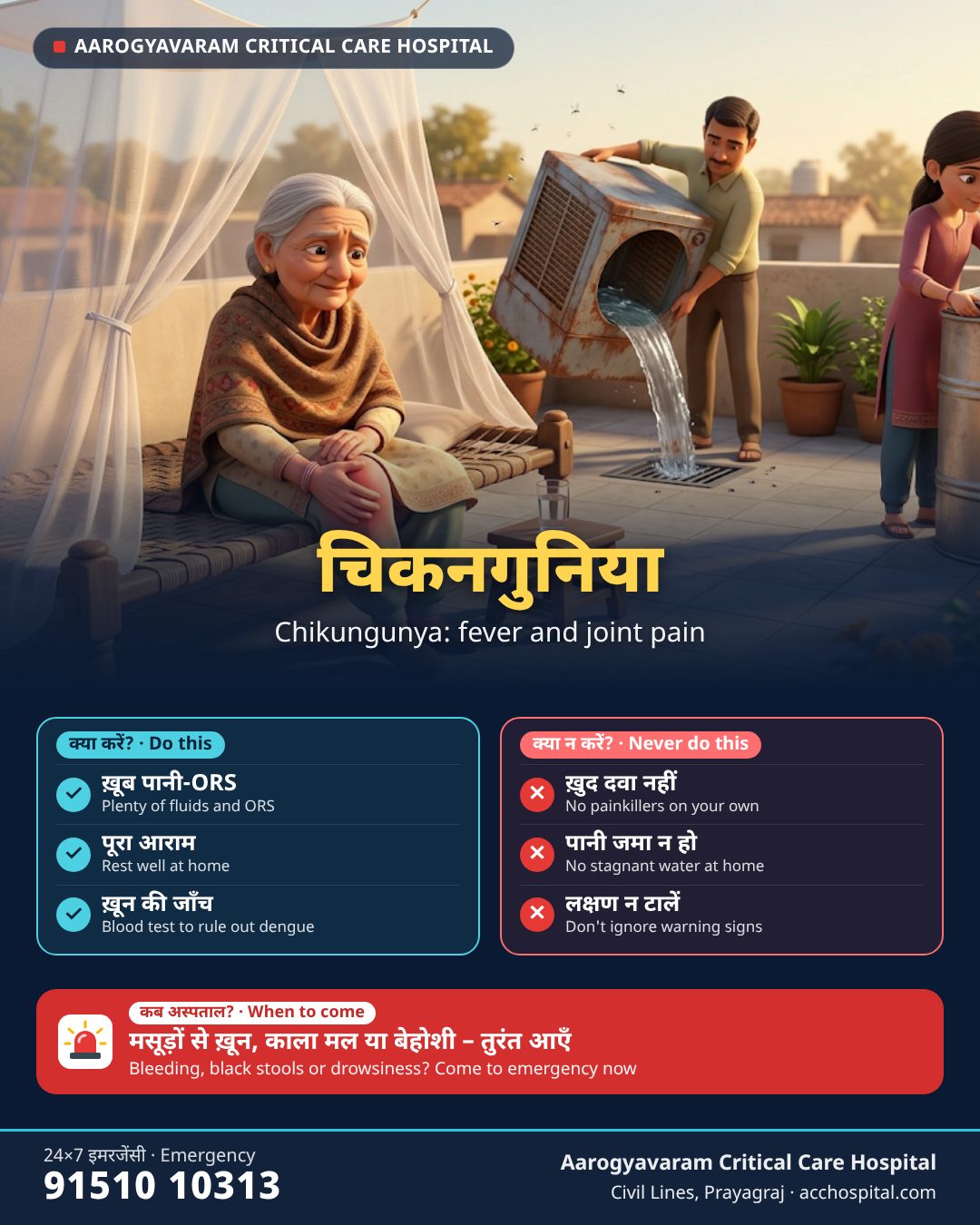
Chikungunya is a viral fever spread by the bite of the Aedes mosquito – the same day-biting mosquito that spreads dengue. In Prayagraj, cases are seen from the monsoon right up to November, when water still collects in coolers, pots, tyres and on rooftops. Its typical sign is sudden high fever followed by joint pain so strong that people may not be able to walk, bend or hold a cup. Most people recover with rest and fluids, but because it looks very similar to dengue in the first days, the one thing to remember is: get a blood test, and do not take painkillers on your own.
24×7 Emergency 📞 Call 91510 10313
What is chikungunya? (Chikungunya kya hai?)
Chikungunya is an infection caused by the chikungunya virus. It does not spread directly from person to person; it spreads when an infected Aedes mosquito bites. The name comes from a word that describes a person bent over with pain. Symptoms usually start 3 to 7 days after the bite. The fever settles in about a week, but joint pain can last for weeks and, in some people, for months.
Symptoms and warning signs
- Sudden high fever, often with chills
- Severe pain and swelling in joints – wrists, fingers, ankles, knees – usually on both sides of the body
- Morning stiffness, difficulty walking or making a fist
- Headache, body ache and tiredness
- A red rash on the body, sometimes itchy
- Nausea, poor appetite
Newborn babies, elderly people, pregnant women near delivery and people with diabetes, heart, kidney or liver disease can become more seriously ill and need closer care.
Causes and who is at risk
- Bites of Aedes mosquitoes, which breed in clean stagnant water in and around homes and bite mainly in the daytime
- Living or working near construction sites, open containers, old tyres or water storage without lids
- Anyone can get it, at any age; elderly people and those with long-term illness are at higher risk of complications
First aid: what to do at home
- Rest as much as possible during the fever.
- Drink plenty of fluids – water, ORS, coconut water, dal water, soups and fresh juices – so that urine stays light in colour.
- See a doctor for a blood test, so that dengue and malaria, which look similar early on, are not missed.
- Take fever or pain medicine only as the doctor advises.
- Use a cool, damp cloth on the forehead for fever; a cold compress may ease swollen joints.
- Sleep under a mosquito net even when ill, so that the mosquito does not pick up the virus and spread it to others in the family.
What not to do: common mistakes and myths
- Do not take painkillers from the chemist on your own. Some common painkillers can increase the risk of bleeding if the fever is actually dengue.
- Do not start steroids or injections for joint pain without a doctor's advice.
- Do not massage swollen, hot joints forcefully.
- Do not ignore warning signs just because "it is only chikungunya".
- Do not stop drinking fluids even if there is no thirst or appetite.
- Do not believe that chikungunya spreads by touch or sharing food – it spreads only through mosquito bites.
When to go to the emergency
Come to the emergency at once if there is:
- Bleeding from gums or nose, blood in vomit, or black stools
- Severe stomach pain or repeated vomiting
- Very little urine, or none for 6–8 hours
- Drowsiness, confusion, fits or unusual irritability in a child
- Breathlessness, chest pain or cold, clammy hands and feet
- Fever in a newborn, or high fever in an elderly person or someone with heart, kidney or liver disease
How doctors diagnose it
Diagnosis is based on the symptoms and blood tests. Depending on the day of illness, the doctor may advise a test for the virus (RT-PCR) or an antibody test (IgM). A complete blood count helps check platelets and blood cells, and tests for dengue and malaria are often done together because the illnesses look alike. Liver and kidney tests may be needed in people who are more unwell.
Treatment options
There is no specific antiviral medicine for chikungunya; treatment is supportive and planned by the doctor:
- Rest, fluids and fever control
- Pain relief chosen by the doctor once dengue has been ruled out
- Intravenous fluids and monitoring in hospital for people with dehydration, warning signs or other illnesses
- Gentle physiotherapy and joint exercises for long-lasting stiffness
- Follow-up care for joint pain that continues for weeks
Recovery and care at home
- Joint pain can last for weeks; move the joints gently every day so they do not stiffen
- Warm compresses and light stretching can help once the fever has gone
- Eat a balanced diet and keep drinking enough fluids
- Return to heavy work slowly
- See the doctor again if pain, swelling or stiffness does not improve
Prevention
- Empty and scrub coolers, buckets, pots, flower vases and bird-water bowls once a week
- Cover water tanks and storage drums with tight lids
- Remove old tyres, broken pots and plastic from rooftops and courtyards
- Wear full-sleeve clothes and use mosquito repellent during the day
- Use mosquito nets and window screens, especially for babies and elderly people
- Ask neighbours to clean their surroundings too – mosquitoes travel from house to house
Ayushman Bharat and cashless treatment
Aarogyavaram Critical Care Hospital is empanelled under Ayushman Bharat (PMJAY). Our Ayushman / TPA desk confirms eligibility and handles the paperwork for cashless treatment with participating insurers.
Frequently asked questions
How long does chikungunya joint pain last?
The fever usually settles in about a week. Joint pain often improves over a few weeks, but in some people, especially older adults, it can last for months. Gentle exercise and follow-up help.
Chikungunya aur dengue mein kya farak hai?
Both are spread by the Aedes mosquito and start with high fever. Chikungunya mainly causes severe joint pain, while dengue carries a higher risk of bleeding and low platelets. A blood test tells them apart.
Chikungunya mein kaun si painkiller leni chahiye?
Take pain or fever medicine only as your doctor advises. Some painkillers are risky if the fever turns out to be dengue, so do not buy them on your own.
Is chikungunya contagious?
It does not spread by touch, coughing or sharing food. It spreads when a mosquito bites an infected person and then bites someone else, so sleeping under a net protects the family.
Can chikungunya happen twice?
After infection, most people develop long-lasting protection against this virus. Other mosquito-borne fevers like dengue can still happen.
Chikungunya test kab karwana chahiye?
See a doctor in the first days of fever. The doctor will choose the right test based on how many days the fever has lasted.
Joint pain ke liye kya karein?
Rest during fever, use a cold compress on swollen joints, and later do gentle movements and stretching. If pain continues, a doctor and physiotherapist can guide you.
When is chikungunya dangerous?
It is more serious in newborns, elderly people and those with diabetes, heart, kidney or liver disease. Bleeding, severe stomach pain, very little urine or drowsiness need emergency care at once.
Aarogyavaram Critical Care Hospital, Prayagraj
Aarogyavaram Critical Care Hospital is at Civil Lines, Prayagraj, with a 24×7 emergency and ICU. Families from across Prayagraj – including Civil Lines, George Town, Katra, Naini, Jhunsi, Phaphamau and nearby areas – can reach us at any hour. Emergency number: 91510 10313.
This article is general health information, not medical advice. Diagnosis and treatment are decided by the treating doctor after examination. In an emergency, call 91510 10313 or go to the nearest hospital.