Antibiotics are medicines that kill bacteria. They save lives in pneumonia, urine infection, typhoid, sepsis and many other serious infections. But in Prayagraj, as across India, they are often taken for every cold, cough, loose motion or fever – many times bought from a chemist without a prescription, or taken from tablets left over from someone else's illness. World Antimicrobial Awareness Week (18–24 November) is a reminder that every wrong dose helps bacteria become resistant. The one thing to remember: take an antibiotic only when a doctor prescribes it, exactly as advised, for the full course.
24×7 Emergency 📞 Call 91510 10313
What is antibiotic resistance? (Antibiotic resistance kya hai?)
Antibiotic resistance means bacteria have changed so that a medicine which once killed them no longer works. It happens faster when antibiotics are used too often, for the wrong illness, in the wrong dose or for too few days. The bacteria that survive multiply and can spread to family members and the community.
When resistance develops, a simple infection can become hard to treat. Patients may need stronger medicines through a drip, a longer hospital stay, and sometimes intensive care. Resistance affects everyone – young and old, rich and poor.
Signs that you may not need an antibiotic
Most of these common illnesses are caused by viruses, and antibiotics do not help them:
- Common cold and runny nose
- Most sore throats and coughs
- Flu and most viral fevers
- Most cases of loose motions in adults, where fluids and ORS are the main treatment
- Dengue and chikungunya
Warning signs that need a doctor (an infection may be serious):
- Fever lasting more than two to three days
- High fever with chills, or fever with a rash
- Cough with breathlessness or chest pain
- Burning urine with fever or back pain
- Loose motions with blood, or with signs of dehydration
- A wound that becomes red, hot, swollen or has pus
Causes and who is at risk
Antibiotic resistance grows because of:
- Taking antibiotics without a prescription
- Using them for colds and viral fevers
- Stopping the course early when you feel better
- Using leftover tablets or sharing them with family
- Taking a "stronger" antibiotic without testing
- Poor hand hygiene, unsafe water and crowded living, which spread infections
People most affected by resistant infections include newborns, the elderly, people with diabetes, kidney disease or cancer, patients on dialysis, people who have had surgery, and anyone in intensive care.
First aid: what to do at home
- For a cold, cough or mild fever, rest, drink plenty of fluids, and use simple measures such as steam and warm drinks.
- For loose motions, give ORS and fluids often.
- Check the temperature and note how many days the fever has lasted.
- See a doctor if fever lasts more than two to three days, or if any warning sign appears.
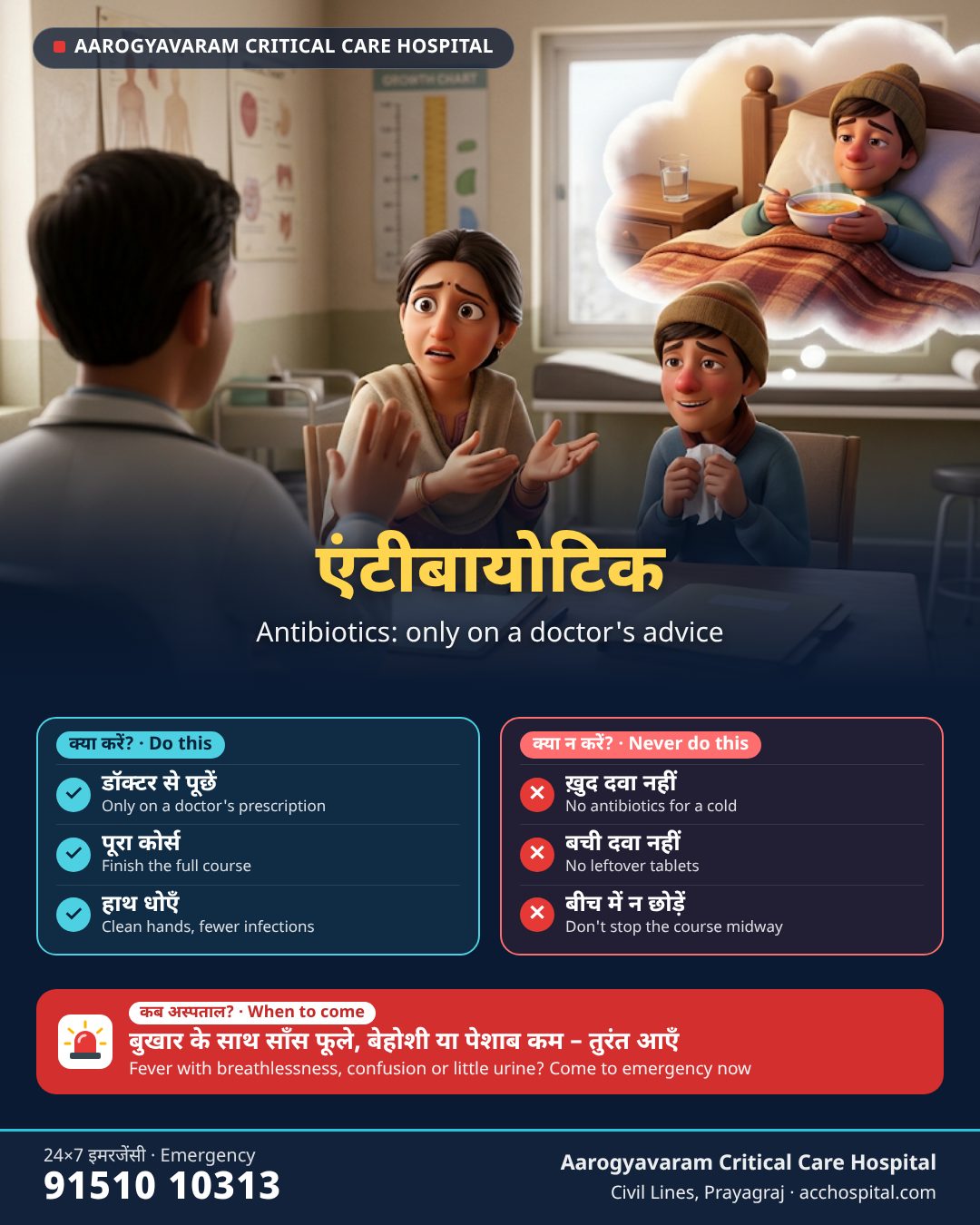
- If an antibiotic is prescribed, take it at the times advised, for the number of days advised, even if you feel better earlier.
- Keep a list of any medicines already taken and show it to the doctor.
What not to do: common mistakes and myths
- Do not ask the chemist for an antibiotic for a cold, cough or fever.
- Do not take leftover antibiotics or give your tablets to someone else.
- Do not stop the course midway because you feel better.
- Do not change or double the dose on your own.
- Myth: "A strong antibiotic will make me well faster." For viral illness it does nothing except cause side effects and resistance.
- Myth: "Antibiotics are needed for every fever." Many fevers are viral. The right test helps the doctor decide.
- Myth: "Antibiotics are harmless." They can cause allergy, stomach upset, diarrhoea and other side effects.
When to go to the emergency
Come to the emergency at once if someone has fever with any of these:
- Breathlessness or fast breathing
- Confusion, drowsiness or fits
- Very little urine
- Cold hands and feet, fainting or very low blood pressure
- A rash with bleeding spots, or bleeding from gums or nose
- Severe abdominal pain or repeated vomiting
- A newborn baby with fever, or an elderly person who is suddenly unwell
These can be signs of sepsis – a serious body-wide reaction to infection that needs urgent treatment. Aarogyavaram Critical Care Hospital at Civil Lines, Prayagraj runs a 24×7 emergency service.
How doctors diagnose an infection
The doctor examines the patient and may advise:
- Blood count to look for signs of bacterial infection
- Culture tests of blood, urine, sputum or pus, which show which bacteria are present and which antibiotic will work
- Tests for malaria, dengue and typhoid in fever
- Chest X-ray for cough with breathlessness
- Urine test for urine symptoms
Culture tests take time but help choose the right medicine and avoid unnecessary ones.
Treatment options
When an antibiotic is needed, the doctor chooses it based on the likely infection, the patient's age, other illnesses, allergies and test reports. Mild infections may be treated with tablets at home. Serious infections may need hospital admission for medicines through a drip, fluids, oxygen and monitoring, and sometimes intensive care. The doctor may change the antibiotic once culture reports arrive.
Recovery and care at home
- Complete the full course exactly as prescribed.
- Rest, eat light nourishing food and drink enough fluids.
- Report any rash, swelling of the face, breathlessness or severe diarrhoea to the doctor at once.
- Return to the doctor if fever comes back or does not settle.
Prevention
- Wash hands with soap before eating and after using the toilet.
- Drink safe, boiled or filtered water and eat freshly cooked food.
- Keep wounds clean and covered.
- Keep vaccines up to date for children and adults, including flu and pneumonia vaccines where advised.
- Never keep antibiotics at home "just in case".
Ayushman Bharat and cashless treatment
Aarogyavaram Critical Care Hospital is empanelled under Ayushman Bharat (PMJAY). Our Ayushman / TPA desk confirms eligibility and handles the paperwork for cashless treatment with participating insurers.
Frequently asked questions
Do antibiotics work for cold and viral fever?
No. Colds, flu and most viral fevers are caused by viruses, and antibiotics do not act on viruses. Rest, fluids and simple care help most people recover.
Antibiotic kab leni chahiye?
Sirf tab jab doctor jaanch ke baad likhein. Bina parchi ke chemist se antibiotic na lein.
What happens if I stop antibiotics early?
Some bacteria may survive and the infection can come back, sometimes harder to treat. Finish the course as prescribed.
Kya bachi hui antibiotic dobara le sakte hain?
Nahin. Har bimari alag hoti hai. Bachi hui dawa ya kisi aur ki dawa lena nuksaan kar sakta hai.
What is antibiotic resistance?
It is when bacteria change so that antibiotics no longer kill them. Misuse of antibiotics makes resistance spread faster.
Bukhar mein antibiotic zaroori hai kya?
Har bukhar mein nahin. Doctor jaanch karke batate hain ki bacterial infection hai ya nahin.
Can antibiotics have side effects?
Yes – allergy, rash, stomach upset and diarrhoea are common. Rarely, serious allergy can occur. Tell the doctor at once if you notice a reaction.
Where to go for serious infection in Prayagraj?
For fever with breathlessness, confusion or very little urine, go to the emergency at once. Aarogyavaram Critical Care Hospital at Civil Lines, Prayagraj has a 24×7 emergency and ICU.
Aarogyavaram Critical Care Hospital, Prayagraj
Aarogyavaram Critical Care Hospital is at Civil Lines, Prayagraj, with a 24×7 emergency and ICU. Families from across Prayagraj – including Civil Lines, George Town, Katra, Naini, Jhunsi, Phaphamau and nearby areas – can reach us at any hour. Emergency number: 91510 10313.
This article is general health information, not medical advice. Diagnosis and treatment are decided by the treating doctor after examination. In an emergency, call 91510 10313 or go to the nearest hospital.